How Agents Are Misleading Buyers by Calling Normal Priced Apartments “Distress Deals” During the Iran Situation
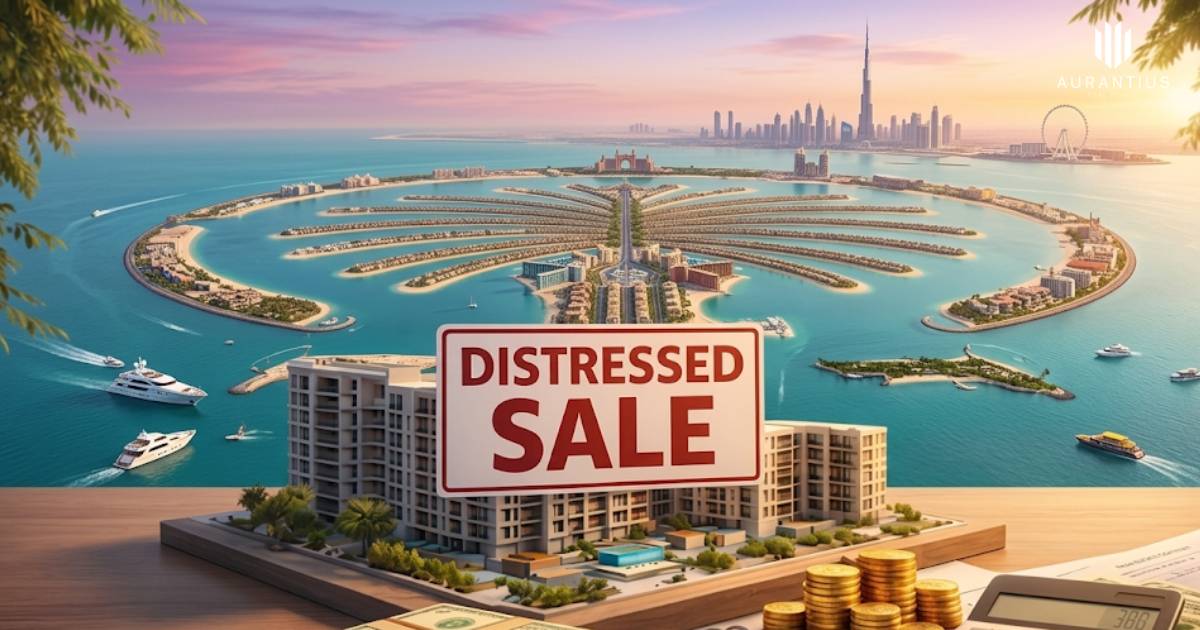
The recent tension involving Iran has created a wave of uncertainty across the region, and unfortunately, some real estate agents are using this moment to manipulate buyers. They are presenting standard-priced apartments as “distress deals,” claiming that sellers are panicking and offloading properties far below market value. This narrative is not only misleading but completely disconnected from the reality of Dubai’s current market performance. Despite the geopolitical noise, Dubai’s property sector remains one of the strongest and most resilient globally, supported by high demand, stable investor confidence, and consistent transaction volumes. The idea that owners are suddenly desperate to sell is simply not true. What is happening instead is that some sellers are choosing to accept slightly lower profits than they originally hoped for, especially those who bought early in the cycle and still stand to make a healthy return. Agents twist this into a “distress deal” story to create urgency and push buyers into fast decisions. A true distress deal involves a seller who must liquidate quickly due to financial pressure, legal issues, or urgent relocation, and these situations are rare in Dubai’s current climate. The market is holding strong, prices are stable, and demand from international buyers remains high. Calling a normal listing a “distress deal” is nothing more than a sales tactic, and buyers should be aware of how this narrative is being used to create false opportunities.
Understanding the Difference Between Real Distress Deals and Sellers Accepting Lower Profits
A genuine distress deal is defined by necessity, not by price. It occurs when a seller is under pressure to exit immediately, often due to financial strain, mortgage default, or personal circumstances that leave no room for negotiation. In such cases, the seller is willing to accept a significantly below market price because speed matters more than profit. These deals are rare in Dubai today because the market is liquid, rental yields are strong, and most owners are in positive equity positions. What agents are currently labelling as “distress” are simply sellers who are adjusting their expectations. Many investors who bought two or three years ago have already seen substantial appreciation, so even if they sell slightly below their ideal number, they still walk away with a solid return. This is not distress; it is strategic selling. The Iran situation has not created panic among property owners, nor has it triggered a wave of forced sales. Instead, it has created an opportunity for agents to exaggerate normal price adjustments and present them as urgent bargains. Buyers must understand that a seller accepting a lower profit is not the same as a distressed seller. The former is a market driven decision; the latter is a financial emergency. Dubai’s current environment shows no signs of widespread distress, and
the data supports this. Transaction volumes remain high, prices remain stable, and demand from Europe, the UK, and Asia continues to grow. The “distress deal” narrative is a marketing tool, not a market reality.
How Developers Are Also Misrepresented as Offering Distress Deals
Just as agents mislabel private sellers, some are now claiming that developers are offering “distress deals” due to the Iran situation. This is equally inaccurate. Developers in Dubai operate with long-term strategies, strong financial backing, and structured release cycles. They do not panic sell, nor do they slash prices because of temporary geopolitical noise. When developers adjust pricing, offer incentives, or release new units at competitive rates, it is part of their planned sales strategy, not a sign of distress. These incentives, such as flexible payment plans, fee waivers, or launch phase pricing, are standard tools used to attract buyers and maintain momentum. Agents, however, often rebrand these normal offers as “distress deals” to create urgency and make buyers feel they are accessing something exclusive. The truth is that developers are currently in one of the strongest positions they have been in for years. Off-plan demand is extremely high, sell-outs happen within hours, and international investors continue to pour into the market. Developers are not struggling; they are thriving. The Iran situation has not weakened their position, nor has it forced them to discount. If anything, the global uncertainty has pushed more investors toward Dubai as a safe haven, strengthening developers even further. Calling developer incentives “distress deals” is simply a tactic used by agents to close deals faster, not a reflection of actual market conditions.
Why the Dubai Market Remains Strong Despite Regional Tension
Dubai’s real estate market has proven time and time again that it is resilient, insulated, and globally trusted even during regional instability. The current Iran situation has not changed this. Investors from the UK, Europe, India, and the US continue to see Dubai as a safe, stable, and opportunity-rich environment. The city’s strong governance, world class infrastructure, and investor-friendly policies create a buffer that protects the market from external shocks. Transaction data shows no decline in demand, no drop-in prices, and no increase in distressed listings. Instead, the market continues to grow, supported by population expansion, high rental yields, and strong international inflows. The narrative that “people are panicking and selling cheap” is simply false. What is actually happening is that some agents are using the geopolitical situation to create artificial urgency. They know that fear sells, and they use the term “distress deal” to make buyers feel they are securing a rare opportunity. But the fundamentals tell a
different story. Dubai remains one of the most stable real estate markets in the world, and its performance during global uncertainty only reinforces its reputation as a safe haven. Buyers should trust data, not fear based sales tactics.
The idea that Dubai is suddenly full of “distress deals” because of the Iran situation is a myth created by agents who want to close deals quickly. The market is not collapsing, sellers are not panicking, and developers are not discounting out of desperation. What is actually happening is far more straightforward: some sellers are accepting slightly lower profits, and developers are offering their usual incentives. None of this qualifies as distress. Dubai’s real estate market remains strong, stable, and supported by global demand. Investors continue to see the city as a safe haven, and the data proves that the market is holding firm. Buyers should be cautious when agents use the term “distress deal,” especially when the price is the same as the rest of the market. True distress deals are rare, and they look nothing like what is being advertised today. Understanding the difference between genuine distress and normal market behaviour is essential for making informed decisions. Dubai continues to offer excellent opportunities, but they come from strong fundamentals, not fear-based narratives. The market is resilient, the demand is real, and the future remains bright for investors who rely on facts rather than sales tactics.